How Much Is a Gold Chain Worth?
Weight and purity set the metal baseline; construction, condition, brand and plating determine what must be checked next.
August 10, 2026 · 8 min read
Key points
- A chain’s visual size does not reveal its gold weight because many large chains are hollow.
- Solid-gold hallmarks differ from GP, GF, HGE and other plated or filled marks.
- Wearable branded chains may sell above melt; broken generic chains usually track metal value.
To put this into practice, use Scrap Gold Calculator, check the assumptions with Gold Value Calculator, and compare the result in How to Sell Gold Jewelry Without Getting Underpaid.
Calculate the chain’s melt value
Place the dry chain on a scale accurate to 0.01 gram, including its clasp unless you know the clasp is not gold. Read the fineness mark, then calculate weight × purity × current pure-gold price per gram.
Typical solid-gold marks are 375 or 9ct, 417 or 10K, 585 or 14K, 750 or 18K, and 916 or 22K. Test an unmarked chain before assigning a purity.
Enter each chain separately when a lot contains different karats. Averaging the weights can understate high-purity pieces and overstate low-purity or plated ones.
Hollow versus solid construction
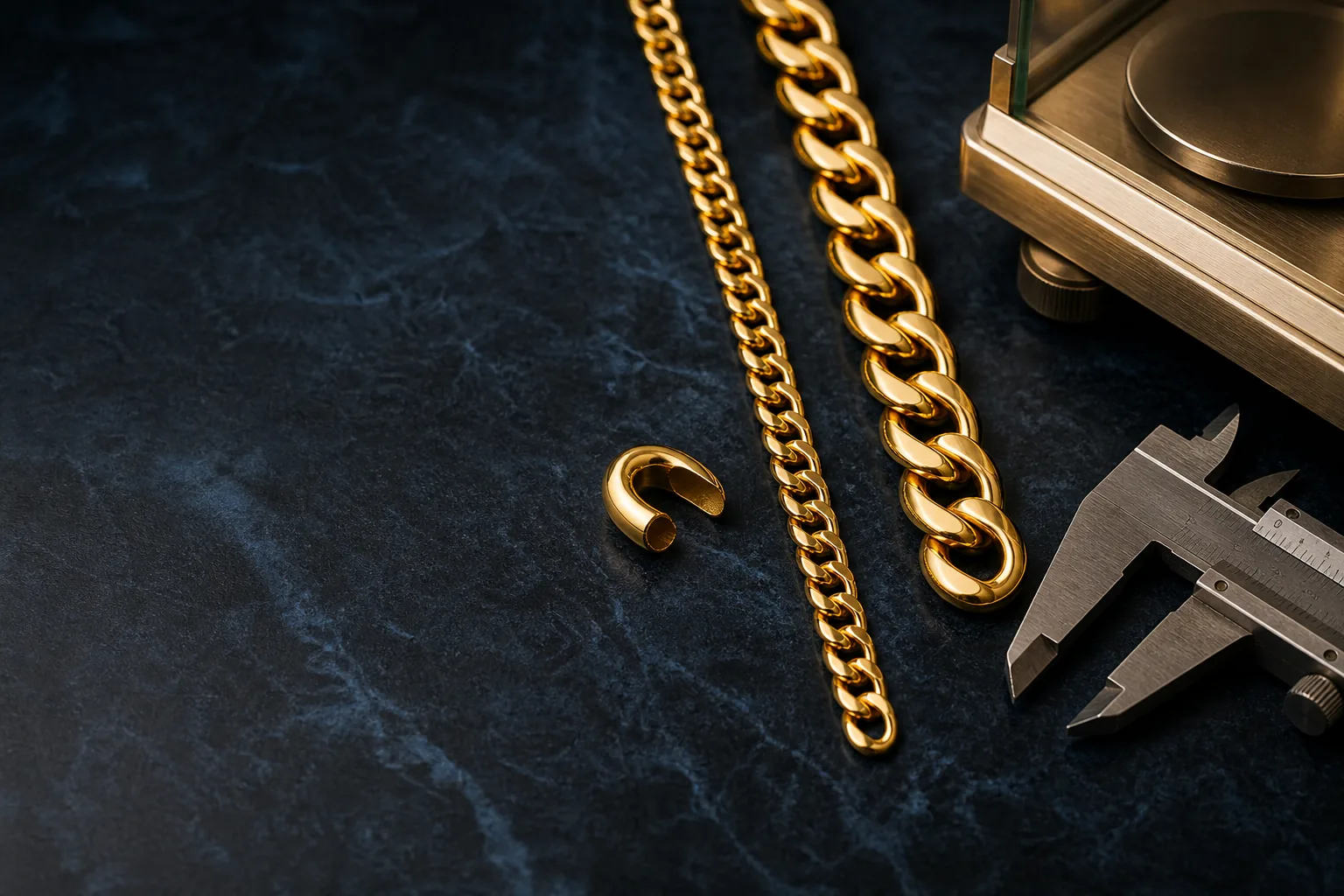
Hollow links can make a chain look substantial while using much less metal. This does not change the value of each gram, but it changes how many grams the chain contains and how well it tolerates wear.
A hollow chain often feels unexpectedly light for its width, may show small dents, and may have a hallmark that includes a construction description. It is still real gold if the alloy is solid throughout the thin walls.
Do not estimate chain value from length and width alone. Two 20-inch curb chains can differ by several times in weight because of link thickness, hollow construction and clasp design.
Solid gold, gold filled and gold plated
GP, GEP and HGE indicate electroplated surfaces. GF and fractional marks such as 1/20 14K GF indicate a thicker mechanically bonded gold layer, but not solid 14K throughout. These items cannot be entered as full-weight solid gold.
Gold-filled material can contain recoverable gold, yet the fine-gold fraction is far below a solid chain and many consumer buyers do not accept it. Plated chains generally have negligible scrap value at individual scale.
A magnet can expose steel, but a non-magnetic result does not prove gold. Brass and copper are also non-magnetic. Use hallmark inspection, density where suitable, acid testing or XRF for a meaningful answer.
When a chain is worth more intact
A clean, wearable chain may sell above melt because the next owner is buying a finished piece. Desirable link styles, heavy solid construction and known makers can support a premium.
Check the clasp, repairs, stretched links, thinning at contact points and dents. Condition affects whether a jeweler can resell the chain without significant labour.
Broken unbranded chains with common machine-made links are the clearest scrap candidates. Signed, antique or unusually heavy chains should receive a second-hand jewelry quote first.
Compare offers without losing track of units
Some buyers quote per gram and others per pennyweight. One pennyweight equals about 1.5552 grams, so convert every quote to the same unit before judging it.
Ask whether the buyer deducts the clasp, tests every link or uses the lowest test result for the entire chain. Compare the final cash figure with the same melt estimate and calculate the payout percentage.
Photograph the chain, hallmark and scale reading. For mail-in sales, use insured shipping and confirm that declined items are returned without an undisclosed fee.
Read article
How to Sell Gold Jewelry Without Getting Underpaid
The five places you can sell gold, what each typically pays, and the preparation that moves an offer by 20-40%.
Read article
Gold Hallmarks and Stamps Explained
A complete decoder for the numbers and letters stamped on gold, including the marks that mean it is not gold at all.
Need a number now?
Use the calculator to estimate gold price per gram, scrap gold value, jewelry, coins, or bullion.