Dental Gold Value: Crowns, Bridges and Scrap
Dental alloys vary widely and cannot be valued by colour alone; testing and clean metal weight are essential.
August 10, 2026 · 7 min read
Key points
- Dental gold is an alloy and its precious-metal content varies considerably.
- Porcelain, tooth material and base-metal components must be excluded from metal weight.
- An XRF test or refinery assay is more reliable than guessing a karat from colour.
To put this into practice, use Scrap Gold Calculator, check the assumptions with Gold Value Calculator, and compare the result in How to Tell If Gold Is Real: 8 Tests Ranked.
Why dental gold is different
Crowns, inlays and bridges are engineered for strength, corrosion resistance and biocompatibility rather than a familiar jewelry karat. Their alloys may combine gold with silver, platinum-group metals, copper or other metals.
Yellow colour is not a purity test. Two crowns that look alike can contain very different percentages of gold, while a pale dental alloy may still contain valuable palladium or platinum.
Because the composition is uncertain, selecting 16K or 18K by appearance can create a misleading estimate. Treat the calculator as a scenario tool until the alloy has been tested.
Determine clean metal weight
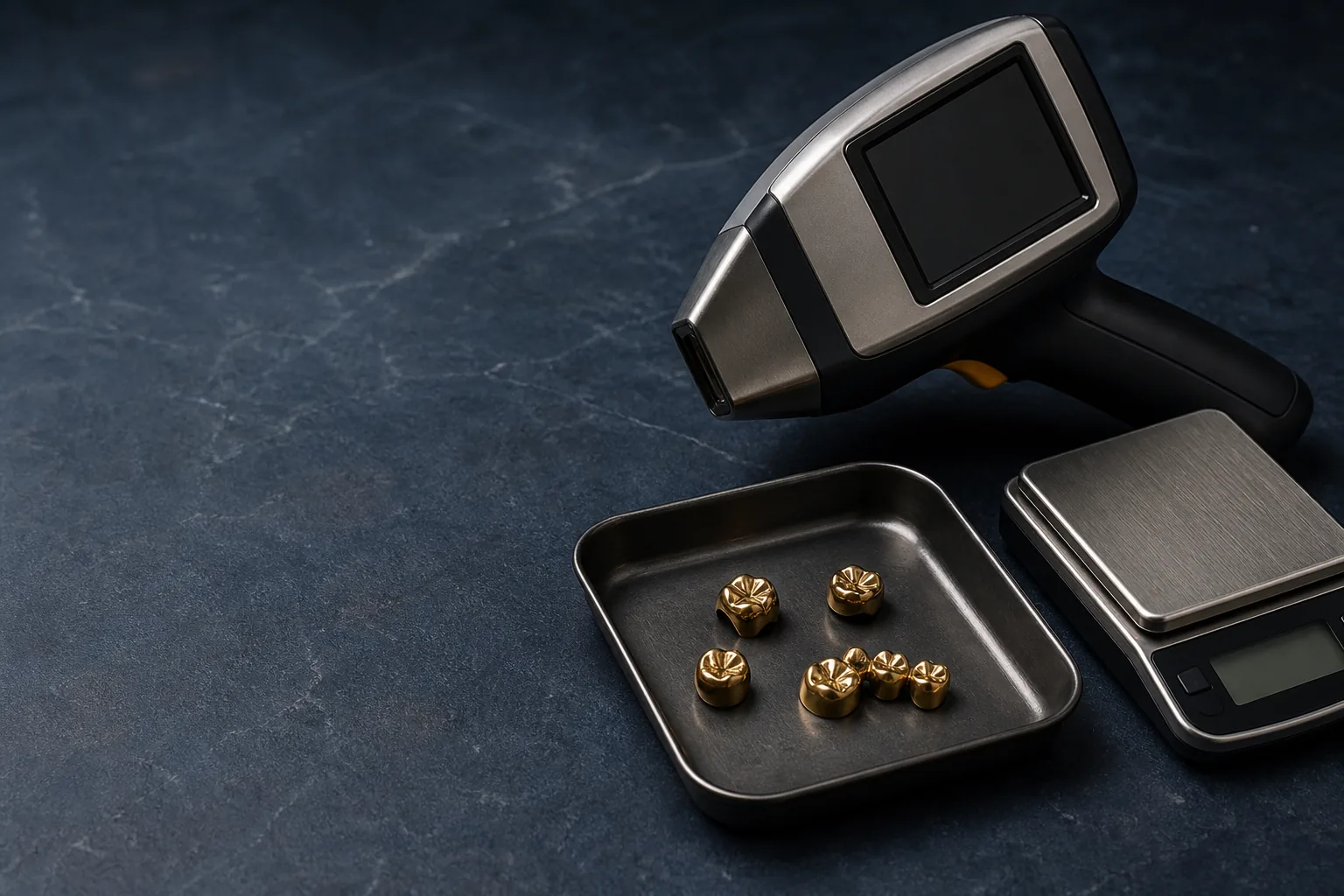
A removed crown may retain cement, porcelain or tooth material. A bridge may contain solder joints and attached components. The gross scale weight therefore is not automatically precious-metal weight.
Do not attempt to burn, chemically dissolve or aggressively clean dental material at home. Dust, sharp edges and unknown alloys create unnecessary risks. A specialist dental refiner can separate and assay the material safely.
Once clean metal weight and gold percentage are known, calculate fine gold as clean grams × gold fraction. Other precious metals should be valued separately rather than folded into a gold karat estimate.
Testing dental alloy
XRF screening gives a quick, non-destructive surface composition and is a useful first step. A refiner may melt and assay a mixed lot for a more representative settlement, especially where surface solder or porcelain hides the bulk composition.
Acid scratch testing is less useful than it is on familiar jewelry alloys because dental metal may include several precious and base metals. A “passes 14K” result does not reveal palladium or platinum value.
Ask a buyer which elements are payable, how the sample is prepared, and whether the final settlement is based on XRF, fire assay or another method.
How buyers calculate an offer
The theoretical value is the sum of each payable metal’s fine weight multiplied by its market price. A refiner then deducts treatment, assay, minimum-lot and settlement charges or applies a published payout percentage.
Small individual crowns can attract a lower effective payout because processing costs do not shrink in proportion to weight. Combining material can improve economics, but only use a reputable buyer with transparent lot tracking.
Request an itemised result showing received weight, payable metals, assay percentages, price basis and deductions. A single unexplained “gold crown price” is hard to verify.
Ownership, records and safe sale
Once a dentist has removed a restoration, local rules and clinical policy determine how it is handled. Ask the practice if you want the item returned and follow its instructions for cleaning and transport.
Photograph and weigh the material before sending it. Use tracked, appropriately insured shipping and confirm return terms. Dental gold can have real value, but a reliable figure begins with testing rather than a generic karat assumption.
Read article
Why Gold Buyers Offer Less Than Spot Price
Where the gap between melt value and your cash offer actually goes, and the percentage bands that count as fair by buyer type.
Read article
How to Tell If Gold Is Real: 8 Tests Ranked
What each home test actually proves, which ones are worthless, and the two that will not lie to you.
Need a number now?
Use the calculator to estimate gold price per gram, scrap gold value, jewelry, coins, or bullion.